 |
East Court, Finchampstead |
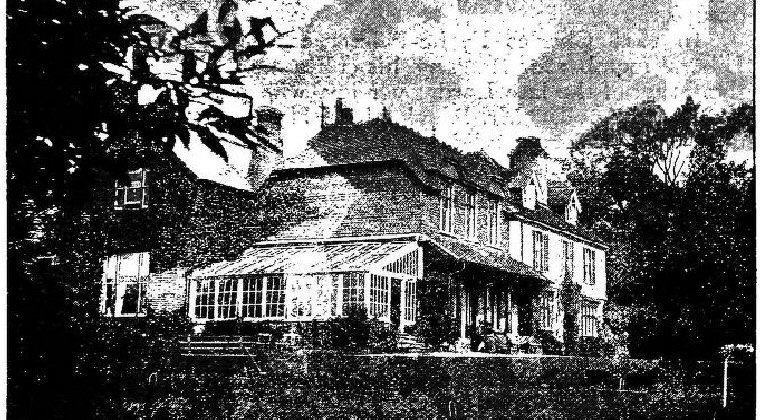
RENOVATION WORK AT EAST COURT
During the mid-late twentieth century, like many large properties, East Court suffered a period of gentle benign neglect in the hands of increasingly frail and elderly occupants. The top floor was sealed off, along with parts of the first floor, and the top staircase was removed and stored in what became the 2nd floor attic. It is also clear from subsequent events that routine maintenance had fallen behind.
In the hands of Mr & Mrs Glover, the first and second floors were fully reopened, and the upper staircase restored to its rightful place. Failing rooflights were replaced, and the large and complex roofscapes were fully overhauled. Wrought iron gates were reinstated after neglect of the originals, and the well was reinstated.
PHOTOS OF THE RENOVATION WORKSTo view a selection of some of the works, click here. |
Renovations since 1993:
In the early 1990s, the property was unoccupied and neglected for a period of about 2 years whilst legal issues were resolved relating to the repossession and sale by the mortgagee subsequent to the bankruptcy of the owner. In 1994, the new owners took possession of a grand property suffering from significant dampness. The absence of simple routine maintenance (gutters and drains) was partly to blame, but the dampness in the walls was due to a more fundamental issue.
Taking the advice of Wokingham Borough's Heritage Surveyor, and a leading building practitioner in the historic buildings sector, IJP, it was established that
- with hard paving over the years, the level of the drive had risen, and was above the floor level of the kitchen and snooker room, leading to increased damp in the walls
- an earlier maintenance programme had resulted in the (previously) limewashed walls being painted with modern cement-based masonry paint, which is impervious to damp. This was preventing the walls from drying out.
- some roof timbers in contact with chimney stacks (which had been cold for some years) were acquiring damp from the brickwork.
- several of the wooden floors at ground level were suffering from dampness caused by excavated spoil from the cellar
- dampness in timbers was mostly superficial, and could be remedied with prompt timber treatment and removal of the source of dampness. The notable exception to this was the porch, which was heavily infested with dry rot, requiring complete replacement and sterilisation of adjoining brickwork to prevent reinfestation.
- leakage from internal pipes was being caused by electrolytic corrosion at junction of new (copper) to old (steel) pipework.
Key recommendations made by the professionals, and accepted, were to
- cut a small trench along the front of the house to separate the raised driveway from the walls of the house
- scrape off the masonry paint and reinstate the original limewash surface
- trim joists adjoining chimney breasts, or ensure separation with a water barrier
- damp in floors could be remedied by excavation of excess soil, clearing existing airways, and the insertion of additional airbricks to improve underfloor ventilation
- course of treatment for woodwork suffering from insect damage
- replace porch with similar structure
- insert separation junctions between copper and steel pipework
The project to remove the masonry paint from the older brickwork was tiresome but rewarding, as the property has now been returned to its original soft white finish. Limewash is a surprisingly easy, cheap and sympathetic material to work with, and actively assists in keeping walls dry by "wicking" out any residual moisture.
The longstanding deterioration in the derelict Coach House and Stable Block was solved by obtaining planning consent for conversion to a residential 'granny annexe'.
In 1997, whilst replacing some inappropriate 1960s aluminium-slatted windows in the south-east elevation, it was discovered that the entire wall was subsiding rapidly. This was a curious construction method, from John Walter's period of ownership. He was keen on self-sufficient building materials (see comments about the construction of his Bearwood Estate) and endeavoured to build using materials from within the estate. Unfortunately in this case, it resulted in a massive cob wall over 2 feet thick, built of sand, with a small binding of lime putty, encased in a thin coating of mortar. As soon as water was able to permeate through cracks in the mortar and a failed gulley drain point, the decline set in, and this resulted in a dangerously weakened structure, with dampness passing for decades to the joists supporting the first floor. These were therefore seriously compromised by rot.
Consultation with Wokingham's Heritage Surveyor and East Court's structural engineer resulted in a concensus that rebuilding as before would not be durable or safe. After bracing the first floor ceiling and 2nd floor roof timbers, the unsafe wall was therefore stripped out (taking care to leave in place the internal plaster skim and original ground floor windows). Joists were treated and reinforced with custom steel. The wall was replaced on deeper footings using conventional blockwork, with a timber frame to the second floor, and reclad in a tile and mortar finish that matches the original style.
Since that time, all roof voids have been accessed, and previously sealed voids have been opened, checked and insulated. A routine maintenance programme has been established, with all gutters checked and cleared routinely, cracked tiles replaced each year, and window woodwork regularly checked and painted. Nearly all windows are hardwood, with double glazed units inserted into a substantial number of the original frames. Stable roofs have been overhauled.
In 2010 a mobile platform ('cherrypicker') was on-site for the summer. This enabled a full check and repair/treatment of the various roof surfaces, ridges, gulleys, gutters, soffits, joists and beams, flashings, dormers and gables, and gave access to some areas of the property that had previously been completely inaccessible. The next scheduled visit of the platform is 2022.
In 2011-12, all three conservatory roofs were renovated, and in 2012, all flat roofs were renovated, as was the stained glass window of Sir Walter Raleigh in the hall.